The Propaganda Movement and La Solidaridad
The reform campaign in Spain: its aims, López Jaena, del Pilar, Ponce and Rizal, the fortnightly La Solidaridad, and the rift that ended Rizal's part in it.
A campaign of pens, not of bolos
Between the execution of the three priests in 1872 and the founding of the Katipunan in 1892, the struggle for Filipino rights was carried on by writers, not soldiers. A small group of educated Filipinos living in Spain, the ilustrados, tried to persuade the Spanish government and public that the Philippines deserved the same laws and liberties as any Spanish province. Historians call this campaign the Propaganda Movement, and its voice was a fortnightly newspaper, La Solidaridad. Rizal was one of its three great names, with Graciano López Jaena and Marcelo H. del Pilar. What the movement wanted, how it worked, why Rizal left it and why it failed explain why the next generation chose revolution.
- 1872 – the Cavite mutiny and the execution of Gómez, Burgos and Zamora.
- 1882 – the Círculo Hispano-Filipino is founded in Madrid; Diariong Tagalog appears in Manila.
- 15 February 1889 – first issue of La Solidaridad in Barcelona, edited by López Jaena.
- December 1889 – del Pilar becomes editor; the paper moves to Madrid.
- January 1891 – the Madrid election of a Responsable; Rizal wins, withdraws and leaves.
- 7 July 1892 – the Katipunan is founded in Manila.
- 15 November 1895 – last issue of La Solidaridad.
- 1896 – López Jaena dies in January and del Pilar in July, both in Barcelona.
1. What the propagandists wanted
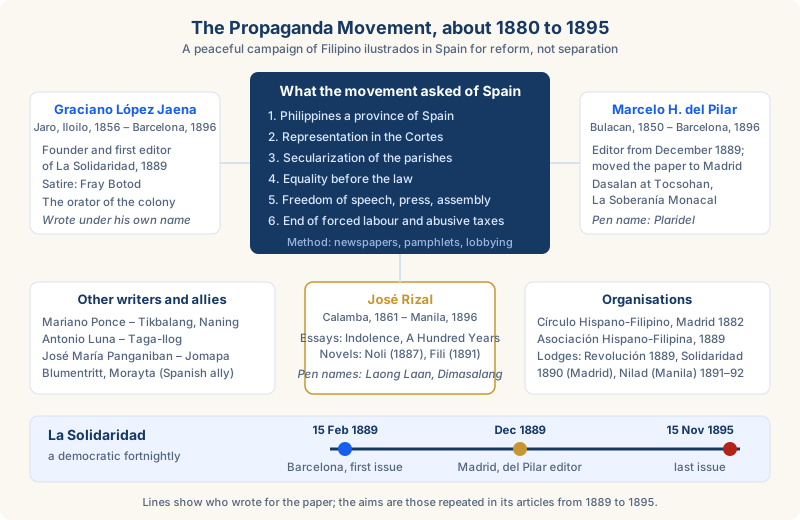
The Propaganda Movement was a reform movement, not a separatist one. Its members called themselves loyal Spaniards of the Philippines and asked Spain to make that loyalty real in law. Their programme had six main demands:
- Assimilation: the Philippines as a regular province of Spain under the same constitution and laws as the peninsula, not under special decrees of the governor-general.
- Representation in the Cortes, which the Philippines had enjoyed from 1810 to 1837 and lost.
- Secularization of the parishes: turning them over to secular priests and ending the friars' political power over towns and schools.
- Equality of Filipinos and Spaniards before the law, in courts, appointments and taxation.
- Freedom of speech, of the press and of assembly, and the end of censorship.
- The end of forced labour (the polo), of abusive taxes and of officials sent to the colony to make a fortune.
Its weapons were newspapers, pamphlets, novels, petitions and the lobbying of liberal Spanish politicians. Its audience was double: the Spanish public, which it hoped to shame into reform, and Filipino readers at home, whom it hoped to awaken.
2. The roots: 1872 and the ilustrados abroad
The movement grew from two sources. The first was 1872: the execution of Fathers Mariano Gómez, José Burgos and Jacinto Zamora taught the educated class that open protest in Manila was deadly, and many of its sons were sent to study in Europe, where they found constitutional Spain, a free press and politicians willing to listen. The second was the wealth of the export economy: sugar, abaca and tobacco paid for the education of the ilustrados, the enlightened ones, in Madrid and Barcelona.
In 1882 Filipinos in Madrid organised the Círculo Hispano-Filipino, a club led by Juan Atayde, with a short-lived review for which the newly arrived Rizal wrote. In Manila the same year the Spaniard Francisco Calvo founded the bilingual Diariong Tagalog, with the young lawyer Marcelo H. del Pilar editing its Tagalog section; Rizal's first article written abroad, El Amor Patrio, appeared in it under the name Laong Laan.
3. Graciano López Jaena
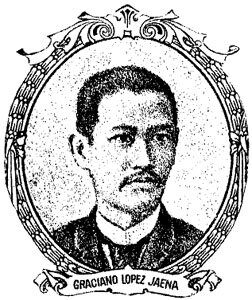
Graciano López Jaena was born in Jaro, Iloilo, on 18 December 1856. Around 1874 he wrote Fray Botod, a satire of a fat, greedy and lecherous friar in a provincial town; it circulated in manuscript, made him a marked man, and in 1880 he left for Spain. In Barcelona he became the most admired orator of the Filipino colony. On 15 February 1889 he founded La Solidaridad and edited it for ten months. A brilliant speaker but a poor administrator, he gave up the editorship to del Pilar when the paper's backers moved it to Madrid in late 1889. He died of tuberculosis, in poverty, in Barcelona on 20 January 1896.
4. Marcelo H. del Pilar
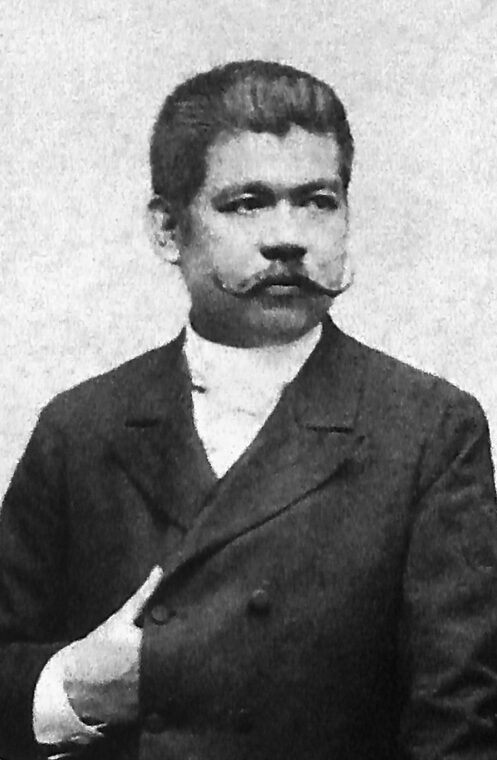
Marcelo Hilario del Pilar was born in Bulacan, Bulacan, on 30 August 1850 and finished law at the University of Santo Tomas. Unlike Rizal and López Jaena, he began his campaign at home, in Tagalog, for ordinary readers. Dasalan at Tocsohan parodied the prayers to attack friar greed. Caiigat Cayo (Be as slippery as an eel, 1888) answered Caiingat Cayo (Beware), the pamphlet in which Fr. José Rodríguez had warned Filipinos against reading the Noli Me Tángere. In Spanish he wrote two indictments of friar power, La Soberanía Monacal en Filipinas (1888) and La Frailocracia Filipina (1889). He organised the anti-friar demonstration of 1 March 1888 in Manila, and when the authorities moved against him he fled to Spain at the end of that year.
In Madrid del Pilar became the practical head of the movement. He took over La Solidaridad on 15 December 1889 and edited it until its end under the pen name Plaridel, an anagram of his surname. He cultivated Spanish politicians, organised Filipino Masonic lodges, and sent pamphlets and copies of the paper home through sympathetic ship officers. By 1895 the money from Manila had dried up. The paper closed in November 1895; del Pilar, sick and penniless, died in Barcelona on 4 July 1896.
5. The newspaper: La Solidaridad
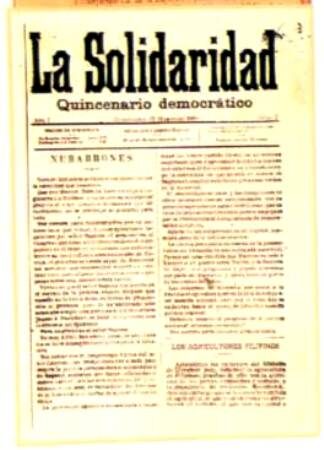
La Solidaridad called itself a quincenario democrático, a democratic fortnightly. It appeared twice a month from 15 February 1889 to 15 November 1895, first in Barcelona and from November 1889 in Madrid. It printed political articles, news from Manila, parliamentary reports, studies of Philippine history, poems, and replies to the anti-Filipino press. Its writers used pen names because their families at home could be punished.
| Writer | Pen name(s) | Role |
|---|---|---|
| José Rizal | Laong Laan, Dimasalang | Essays and polemics; the movement's most famous name |
| Marcelo H. del Pilar | Plaridel | Editor from December 1889; political strategist |
| Graciano López Jaena | (own name) | Founder and first editor; orator |
| Mariano Ponce | Tikbalang, Kalipulako, Naning | Business manager and secretary |
| Antonio Luna | Taga-Ilog | Sketches of Madrid life; later a general of the Revolution |
| José María Panganiban | Jomapa | Polemics on education; died young in 1890 |
| Dominador Gómez | Ramiro Franco | Political articles |
| Eduardo de Lete | (own name) | Articles; later quarrelled with Rizal |
| Ferdinand Blumentritt | (own name) | Austrian scholar; the movement's foreign champion |
Rizal's principal pieces in the paper were Los Agricultores Filipinos (25 March 1889), La Verdad para Todos (31 May 1889), Una Profanación (31 July 1889), the four-part Filipinas dentro de cien años (1889–1890) and the five-part Sobre la indolencia de los filipinos (1890); Topic 9 studies them in full. Its chief Spanish ally was Miguel Morayta, professor of history in Madrid and a leading Mason, president of the Asociación Hispano-Filipina founded in January 1889 to lobby the Cortes and the ministries.
6. Masonry as a network
Freemasonry gave the propagandists a secret, disciplined organisation with international ties. López Jaena founded the Logia Revolución in Barcelona in 1889; del Pilar organised the Logia Solidaridad in Madrid in 1890, with Rizal and Ponce among its members; and the first Filipino lodge in Manila, Nilad, was organised in 1891 and chartered at the start of 1892. The lodges spread the paper, raised money and recruited the men who later founded the Liga Filipina and the Katipunan, which is why the friars preached that Masonry and filibusterismo were the same thing.
7. Rizal and del Pilar part ways
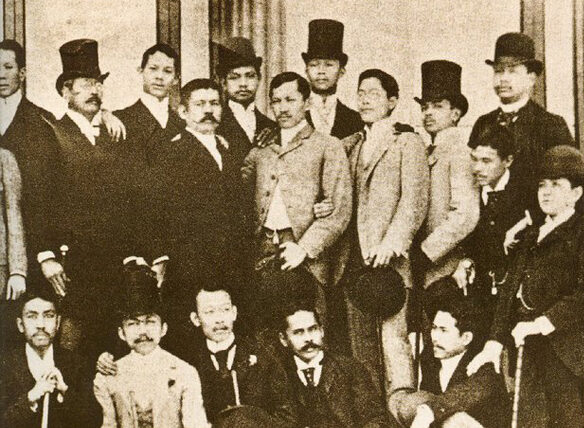
Rizal returned to Madrid in August 1890 to press his family's case in the Calamba land dispute and found the colony divided. Some admired his seriousness; the younger students preferred del Pilar's easier manner and resented Rizal's lectures on gambling and discipline. In the first days of January 1891 the colony tried to elect a Responsable, a single leader whose decisions all would follow. The two camps split the first two ballots; on the third Rizal was elected, but the bitterness convinced him he could not lead a divided colony. He declined, left Madrid for Biarritz, and leadership in Spain passed to del Pilar.
Behind the quarrel lay a real difference of method. Del Pilar believed the campaign in Spain was the only useful one: win the liberals and the Cortes, and reforms would follow. Rizal had concluded that Spain would never grant what Filipinos could not win for themselves, and that the people had to be educated and organised at home. In 1891 he stopped writing for La Solidaridad, asked del Pilar to publish nothing more from him, and turned to finishing El Filibusterismo and to the Liga Filipina, founded in Manila in 1892.
8. Decline, failure and legacy
By 1894 the movement was dying. Spanish politicians listened politely and did nothing; the Cortes never restored Philippine representation; the friars kept their parishes. The Manila committees that financed the paper tired of paying for a campaign without results, and the money stopped. The last issue appeared on 15 November 1895, and within a year both editors were dead.
Measured by its programme, the movement failed: not one of its six demands was granted. Measured by its effect, it succeeded in a way its leaders did not intend. It created the sense that the people of the islands were one Filipino nation, and a body of writing, Rizal's novels above all, that showed Filipinos their own condition. Readers in Manila drew Rizal's conclusion: if Spain would not reform, Filipinos must act for themselves. On 7 July 1892, the day Rizal's deportation to Dapitan was announced, Andrés Bonifacio and his companions founded the Katipunan, whose aim was not assimilation but separation. The reformists had asked to become Spaniards; the Katipunan decided to be Filipinos.
Key terms
| Term | Meaning |
|---|---|
| Propaganda Movement | The reform campaign of Filipino ilustrados in Spain, about 1880 to 1895, that sought assimilation and rights by peaceful means. |
| Ilustrado | An educated, usually wealthy Filipino of the late nineteenth century; "enlightened one". |
| Assimilation | The demand that the Philippines become a province of Spain under the same laws as the peninsula. |
| Secularization | The transfer of parishes from the religious orders (friars) to secular priests. |
| La Solidaridad | The movement's fortnightly newspaper, Barcelona and Madrid, 15 February 1889 to 15 November 1895. |
| Quincenario | A fortnightly, appearing twice a month. |
| Círculo Hispano-Filipino | The 1882 Madrid club of Filipinos and Spanish friends that published a short-lived review. |
| Asociación Hispano-Filipina | The lobbying association founded in Madrid in 1889 with Miguel Morayta as president. |
| Plaridel | Pen name of Marcelo H. del Pilar, an anagram of his surname. |
| Laong Laan, Dimasalang | Rizal's pen names. |
| Responsable | The single leader the Madrid Filipinos tried to elect in January 1891; Rizal won and declined. |
| Frailocracia | Del Pilar's word for government by friars; title of his 1889 pamphlet. |
Guided readings
Reading 1: The first editorial of La Solidaridad
Source: Graciano López Jaena, "Nuestros propósitos" (Our aims), La Solidaridad, 15 February 1889; close paraphrase.
The paper declared that it would fight every reaction and every step backward, welcome every liberal idea and defend progress in all its forms; that it would be modest in means but firm in aims; and that its special task was to lay before the Spanish nation the needs of the Philippines, so that the mother country might remedy them.
- List the verbs: fight, welcome, defend, lay before. None of them is "separate" or "revolt".
- Identify the audience: Spain, called the mother country.
- Compare this programme with the six demands in section 1.
Takeaway: From its first issue the paper defined itself as a loyal, reformist and liberal voice speaking to Spain on behalf of the colony.
Reading 2: Del Pilar on friar rule
Source: Marcelo H. del Pilar, La Soberanía Monacal en Filipinas, Barcelona, 1888; close paraphrase.
Del Pilar argued that the real sovereign in the Philippines was not the Crown but the friar: the parish priest controlled the election of town officials, the schools, the certificates a Filipino needed to travel or marry, and the information that reached Madrid, so that the government saw the colony only through friar eyes; reform was impossible until this monastic sovereignty was broken.
- Underline the four instruments of power he names: elections, schools, certificates, information.
- Explain why this analysis made secularization the first demand of the movement.
- Connect it to the Noli Me Tángere, in which Padre Dámaso and Padre Salví decide the fate of a town.
Takeaway: The propagandists attacked the friars not because of religion but because the friars were the colonial government in the towns.
Reading 3: Rizal withdraws from the paper
Source: Rizal's letters of 1891 to del Pilar and to friends in the Madrid colony after the election of a Responsable; plain translation and paraphrase.
Rizal told del Pilar that he would no longer write for La Solidaridad and asked that nothing more of his be printed; he did not wish to be an obstacle to the unity of the colony, he had other work to do, and he believed the Filipinos must be made ready at home, because the struggle would be decided in the Philippines and not in Madrid.
- Separate the personal reason (the quarrel) from the political reason (the battlefield is the Philippines).
- Note what Rizal turned to next: the Fili, published in Ghent in 1891, and the Liga Filipina of 1892.
- Decide whether his withdrawal was a defeat for the movement or a change of strategy, and give one piece of evidence.
Takeaway: The split of 1891 was about where the nation would be made: in the Spanish parliament or among the Filipino people.